Optum now
Company: RVO Health / Role: senior Product designer
—————————-
Optum Now is a joint venture between Optum/UHG and Red Ventures to create a platform that connects resources across both companies to include a best in-class experience for the user. By connecting eCommerce properties to Health Articles and knowledge resources we give power to the user to not only inform themselves of their conditions but also connect them to a marketplace where they can start to take action. By leveraging AI we are able to more quickly connect users to the information and products they need.
Optum Now was built from the ground up from 0-1 and launched in July 2024
discovery workshop sessions
To better understand the needs and expectations of both Optum Now stake holders and users we conducted Design Workshops and interview sessions to get an understanding of the problems space we would be working in and to pull out user needs that the business may not have identified.
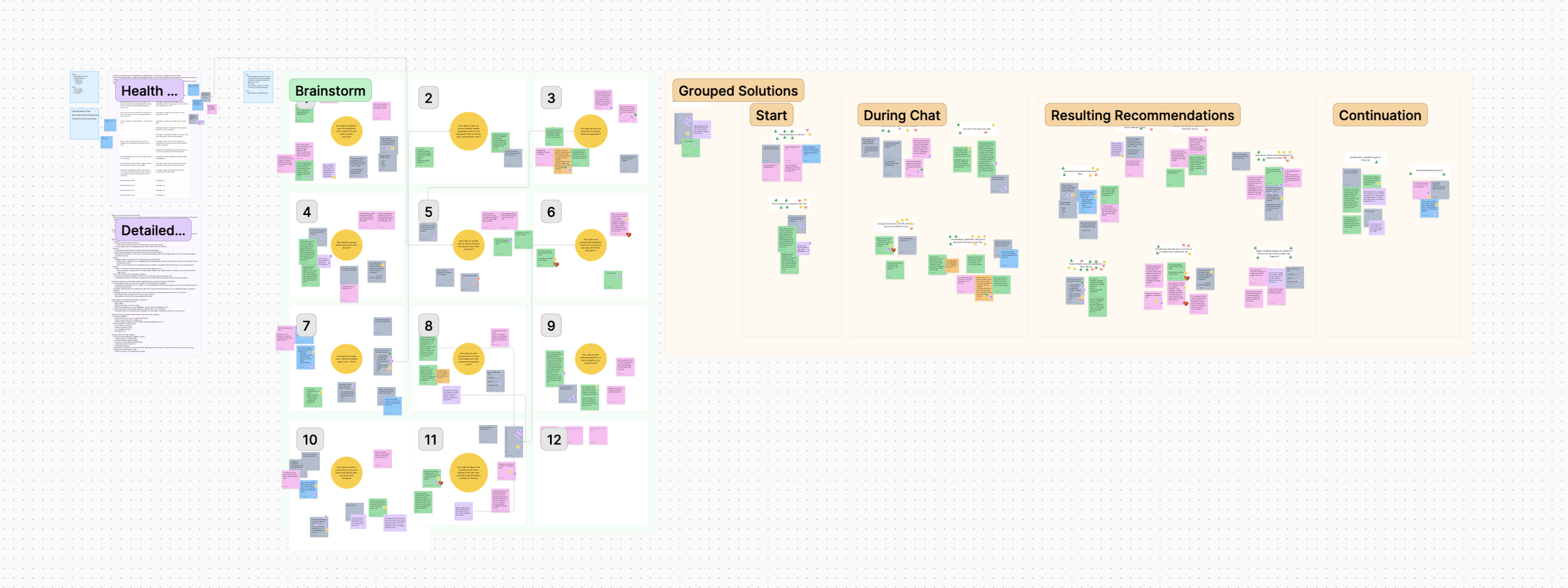
Insights were gathered and aggregated over many workshops conducted within FigJam
Sitemap and work flow
After we had loosely mapped out what the business and users would need in our workshop sessions we conducted sorting exercises internally to come up with our MVP site map to work towards in our production schedule.
From these sessions we are able to map out not only key features that the product would need but also a level user journey’s that our team could start ideating and creating solutions from.
In order to get the correct information and insights for Optum Now, we conducted user tests for every feature we intended to roll out to ensure we were connecting the various properties correctly and to make sure added features such as AI integration and appointment planning matched user expectations. These tests and interviews focused around 5 main topics and requirements:
Platform & Goals Requirements to align on where priority needs from a business and user perspective
Empathy Maps to understand our personas better
Content Mapping: type of content and in which phase apply
Creative Session to start landing the creative concept
Scenario Mapping where we co-created a user journey to identify user needs and potential opportunities
At the end of the tests, we achieved a really complete Platform Map where we had a better understanding and definition of every single phase.
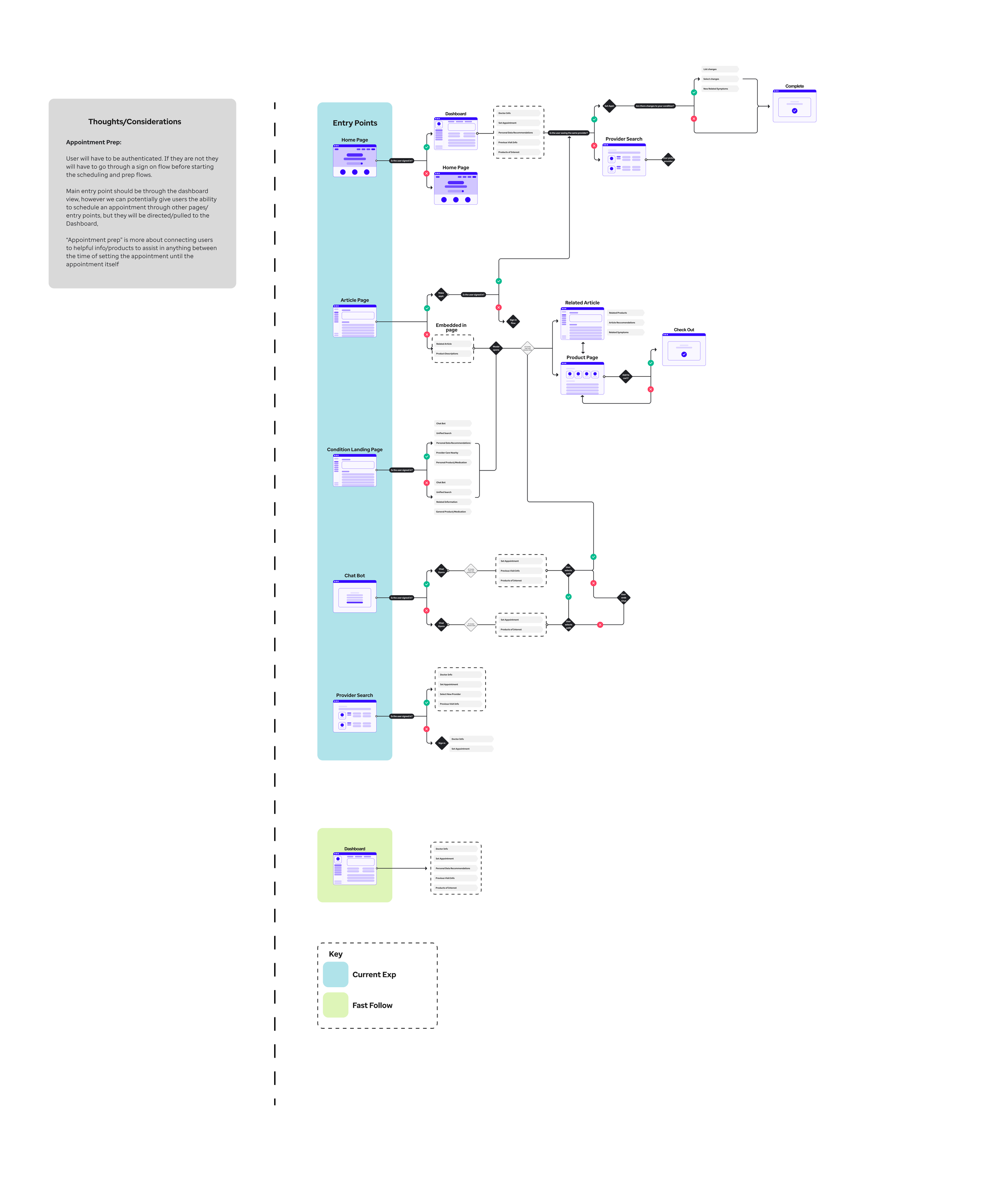
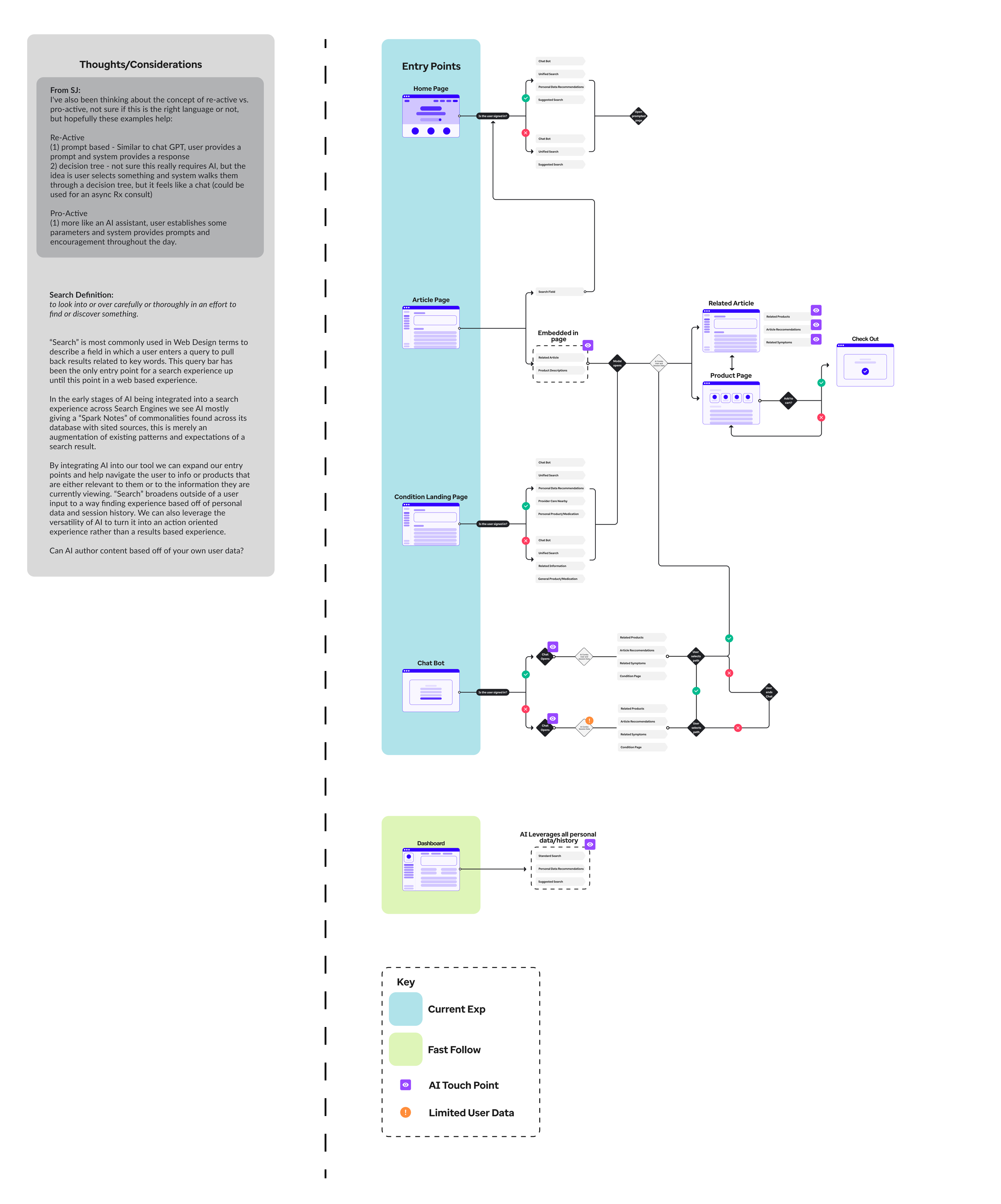
Each conversation and ideation session helped build a visual artifact to understand the needs, content and opportunities at each phase of our experience.
Once we had our sitemap defined, the UX team started to create content maps for each page and experience so that we could effectively create functional low fidelity wireframes that accomplished the goal of each page. The three that the team started with were the: Homepage, Condition pages, and Article pages. We used the content maps to start creating a shared design system within.
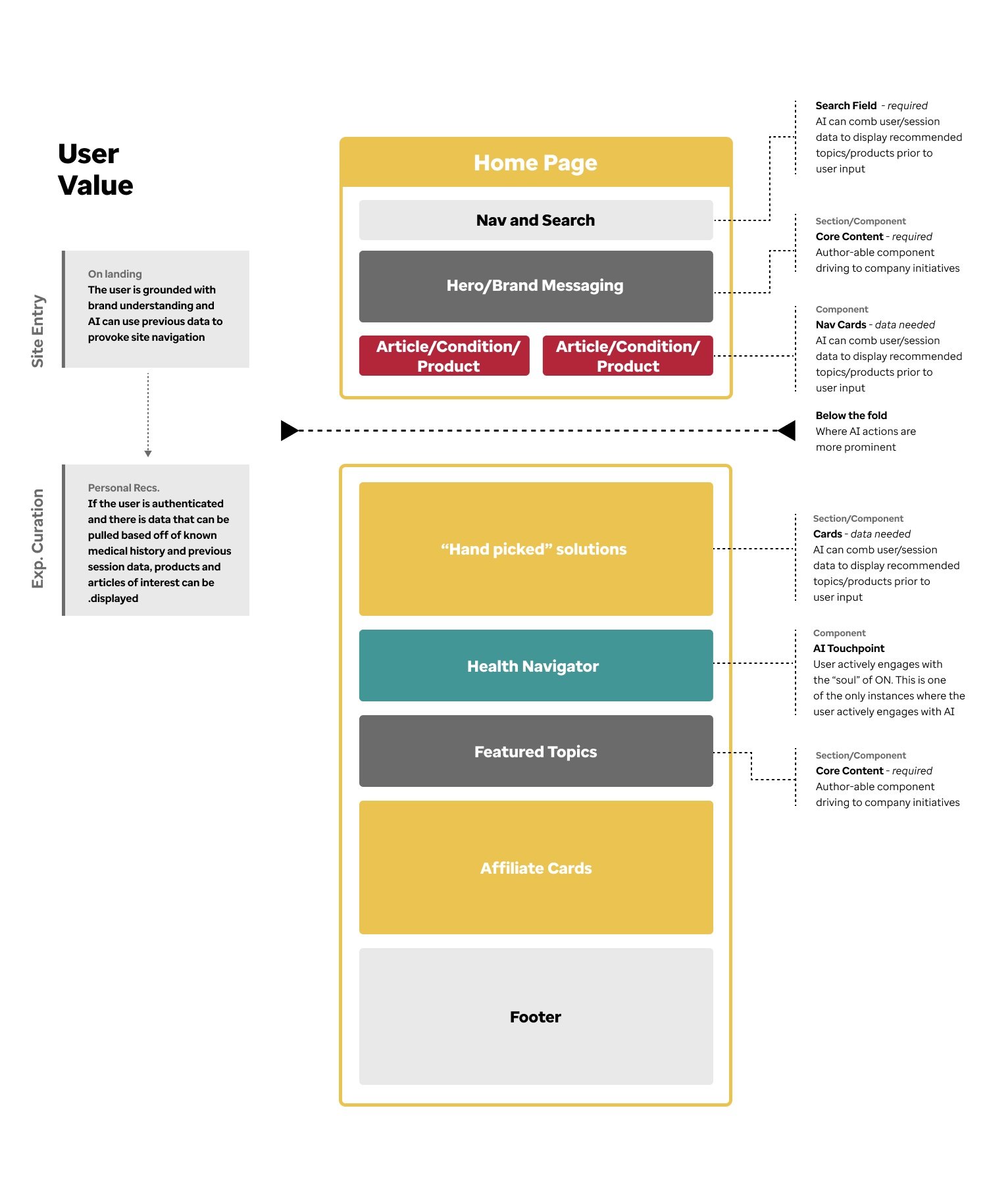
Initial “Homepage” content map
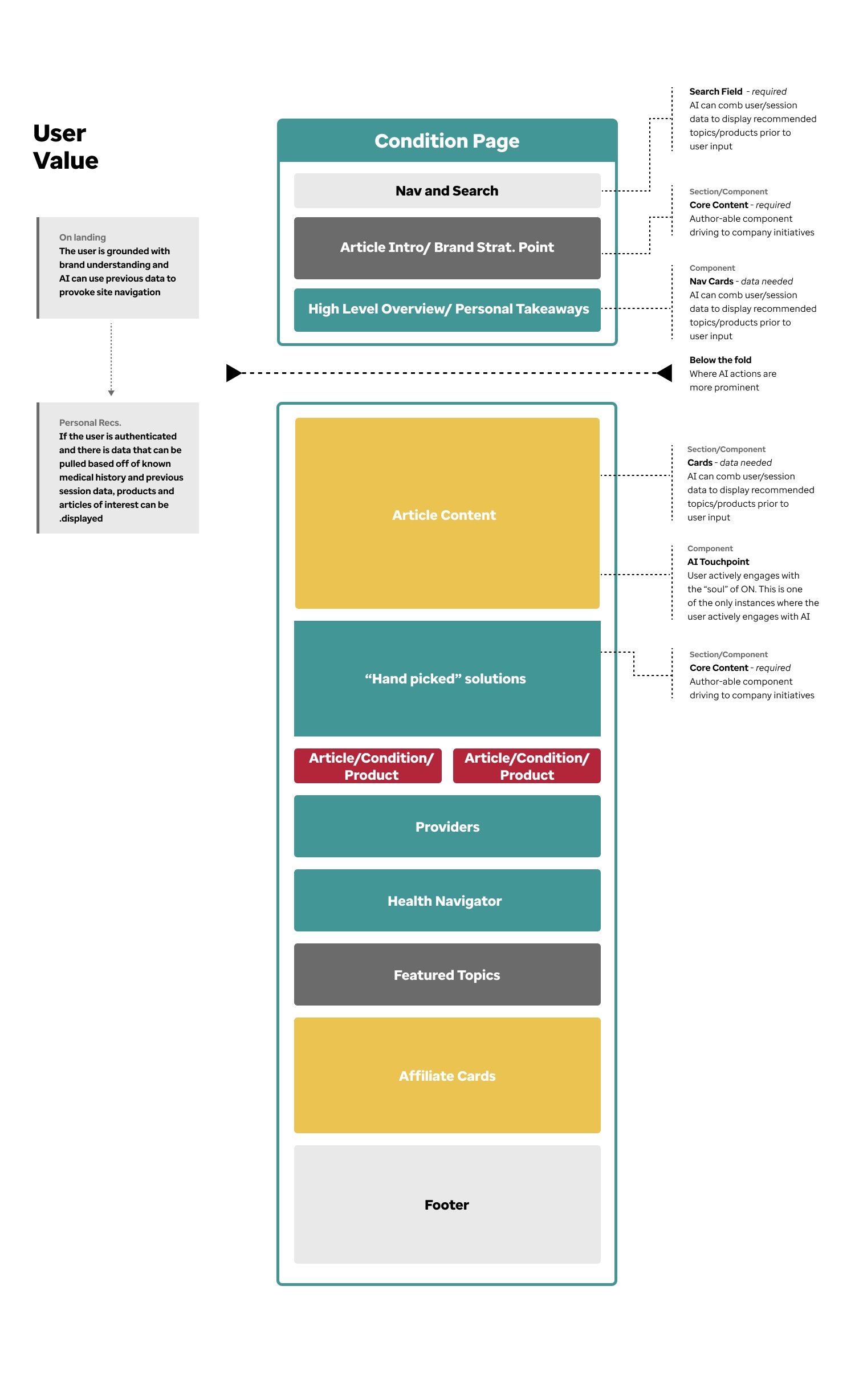
Initial “Condition” page content map
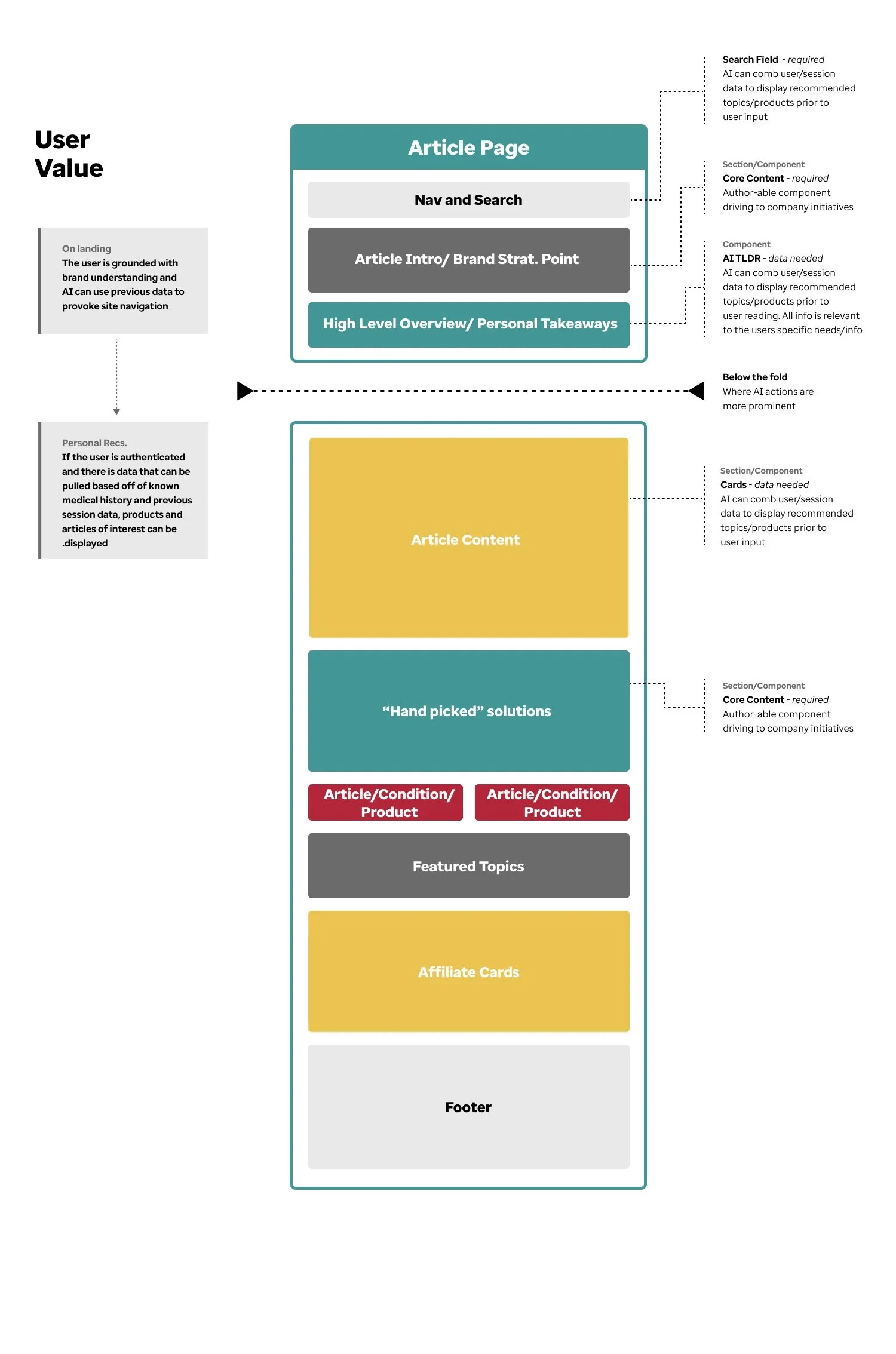
Initial “Article” page content map
Homepage - iterations
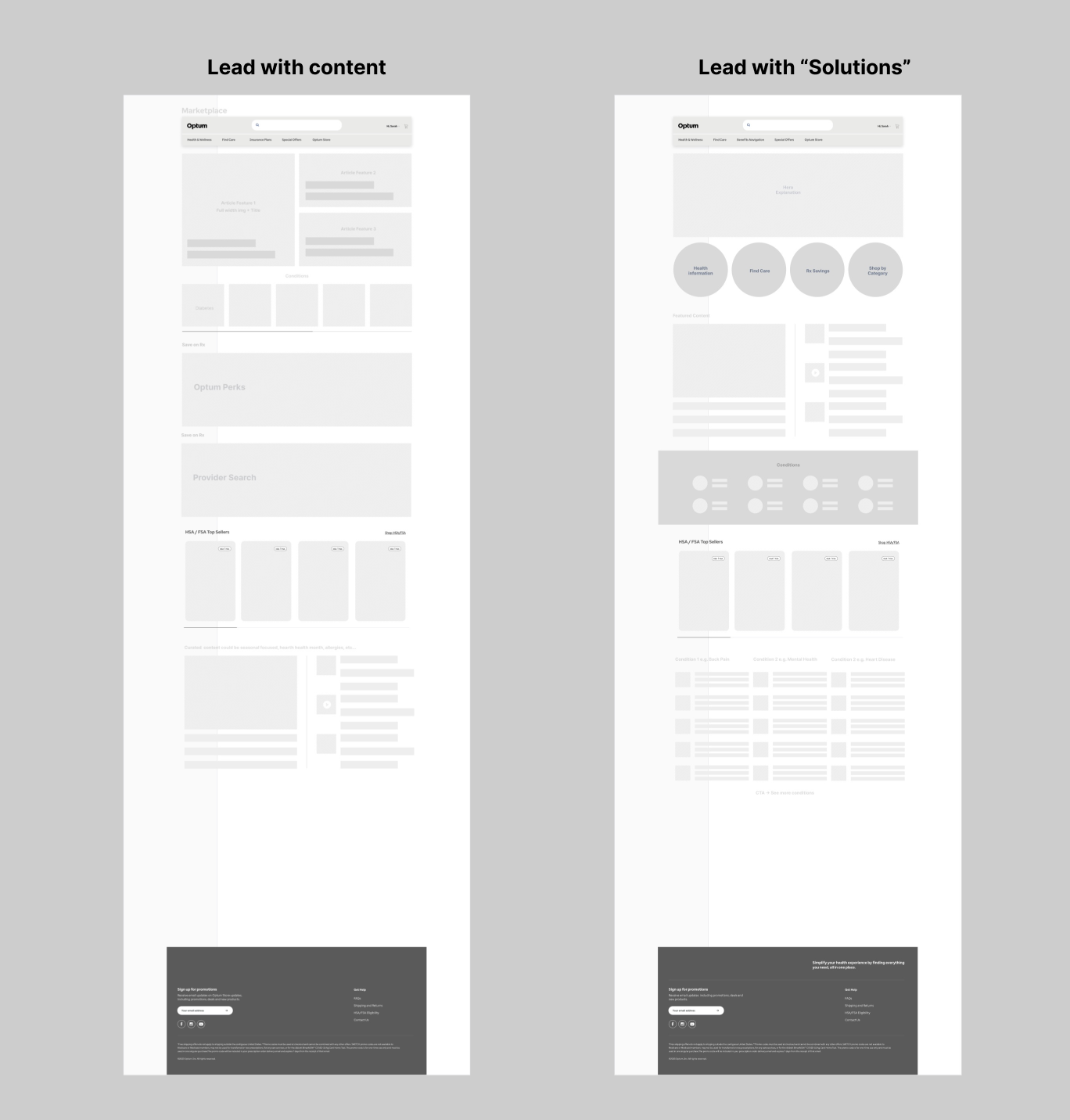
On the UX level of the homepage we explored many layouts, content hierarchy, and brand pace in a LoFI state. Some of which was brought to user testing to validate assumptions and allowed our team to be more tactical and flexible before starting to lock in patterns and functions.
The two biggest areas we tossed around was to either lead the homepage experience with links to content and article from Healthline and other Optum resources, or to go more product and eComm focused and lead with what we were calling “Solutions”. Meaning products to alleviate ailments or HSA/FSA eligible items through Optum Store and Optum Perks.
Because we kicked off the styling of this platform in tandem with the creation of the platform’s UX we went though a few UI iterations as we developed out the DPL.
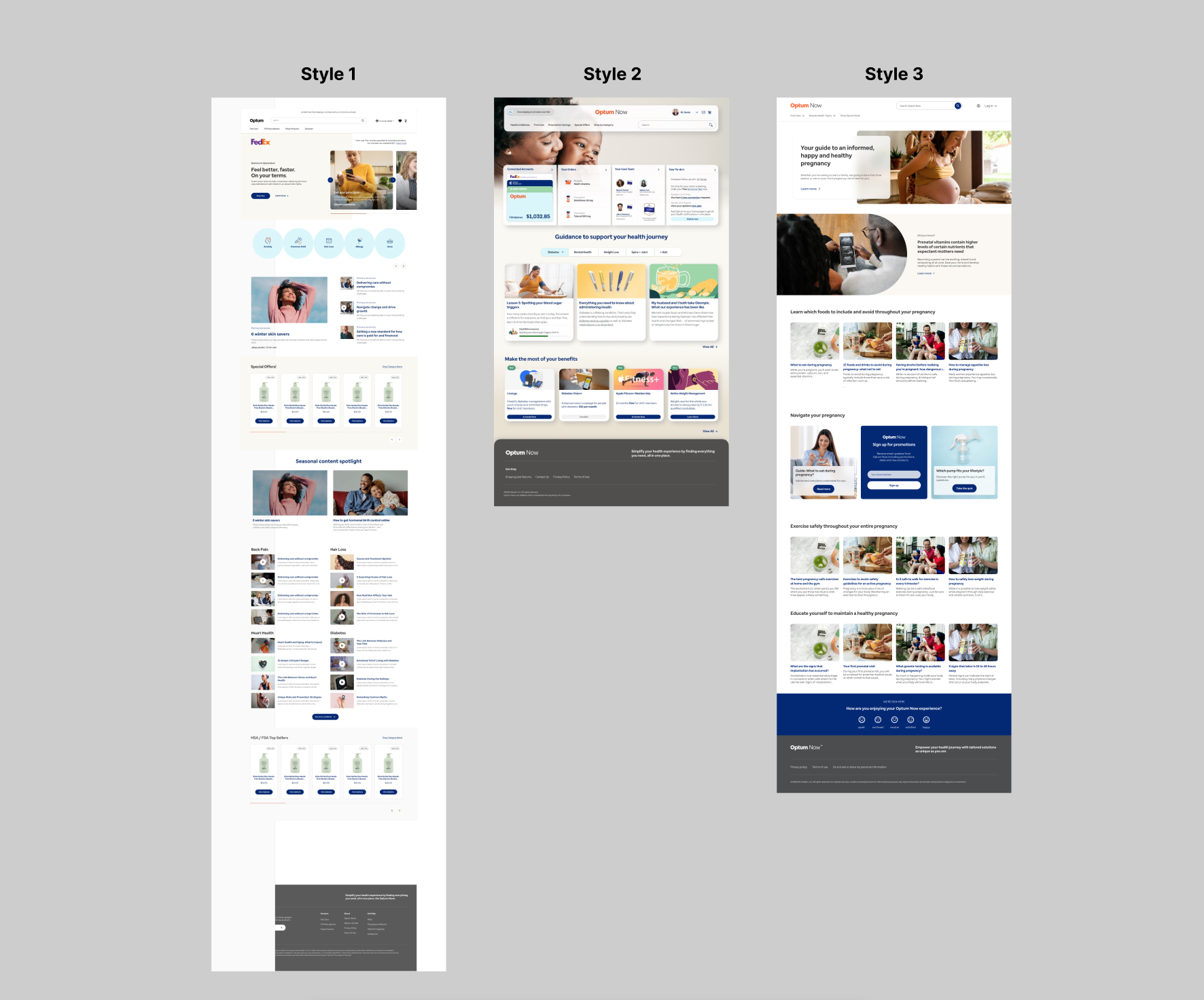
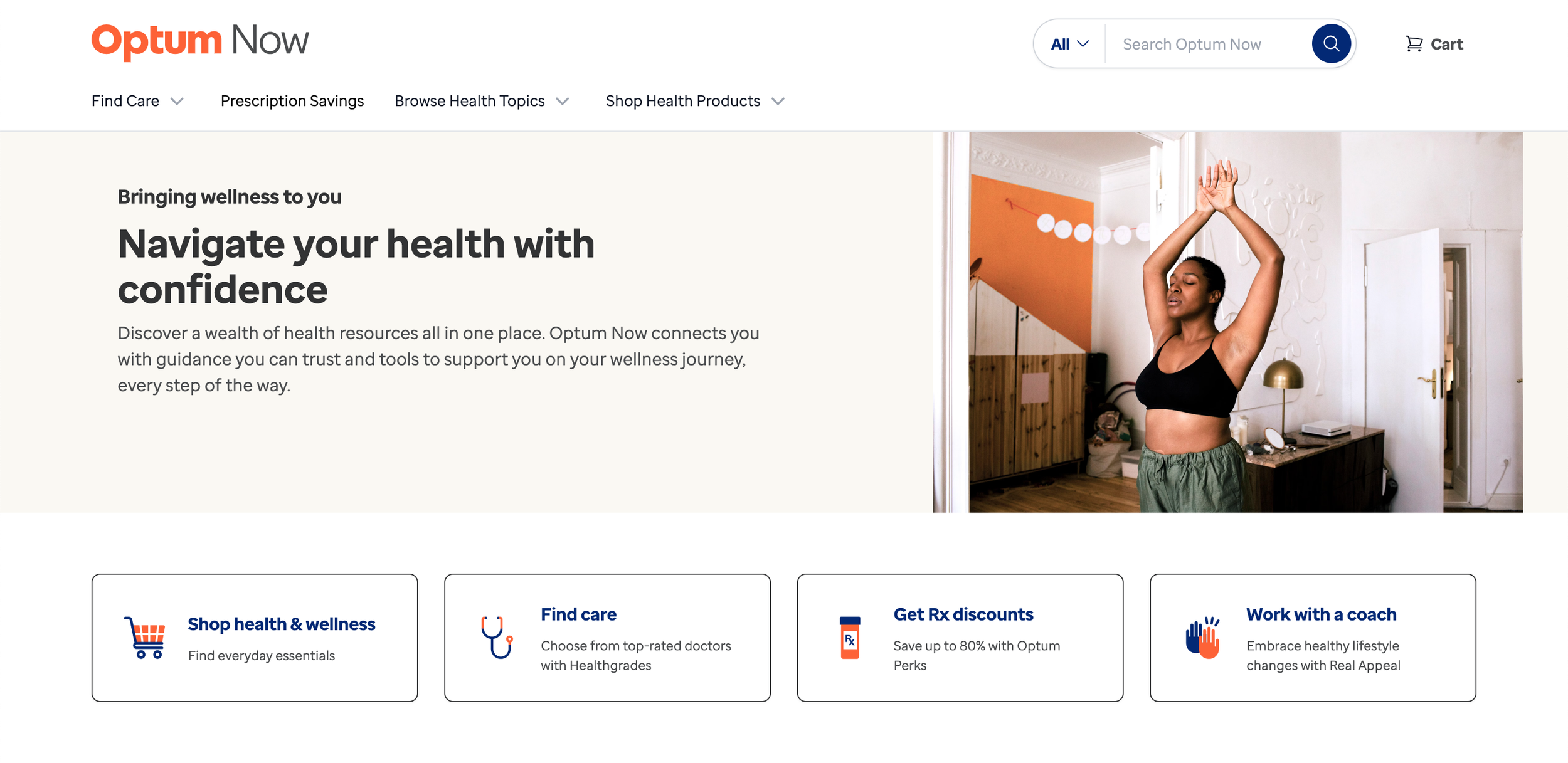
In the end we landed on a clean design that prioritized a solution focused approach. Entry to content is still easy as it is within the topline navigation and we incorporated it into various elements throughout the site in our AI integration work.
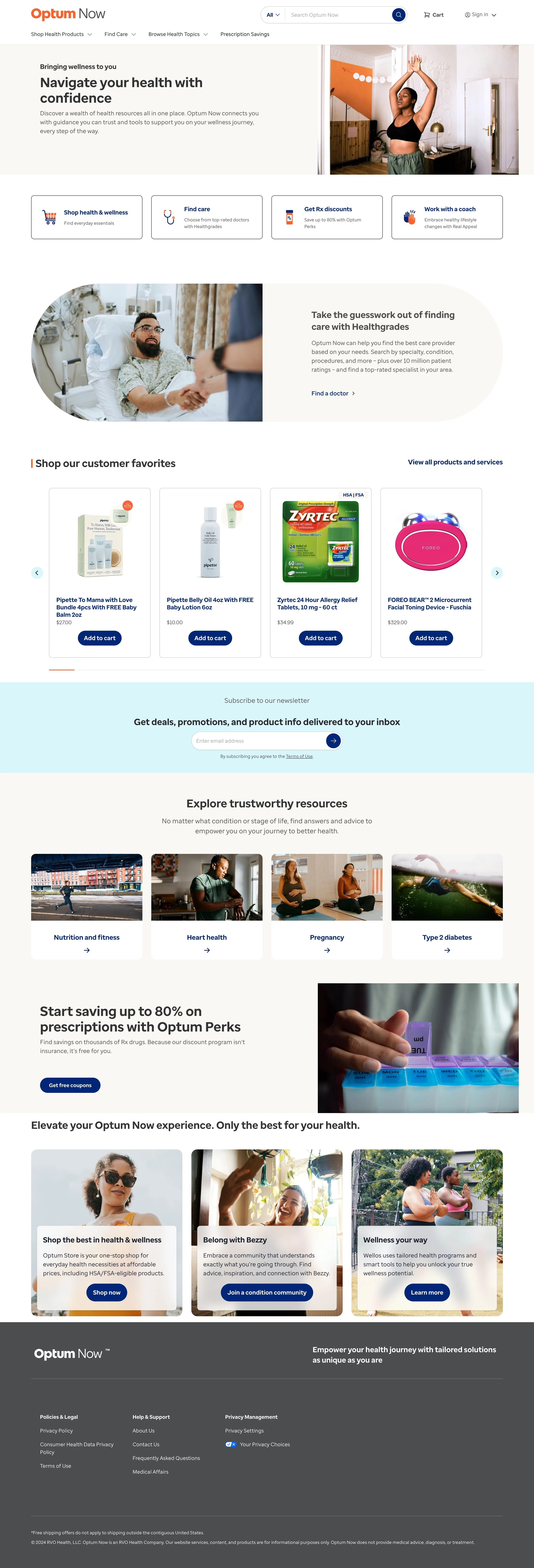
Final Homepage design that went into production and is live
ecommerce and RX
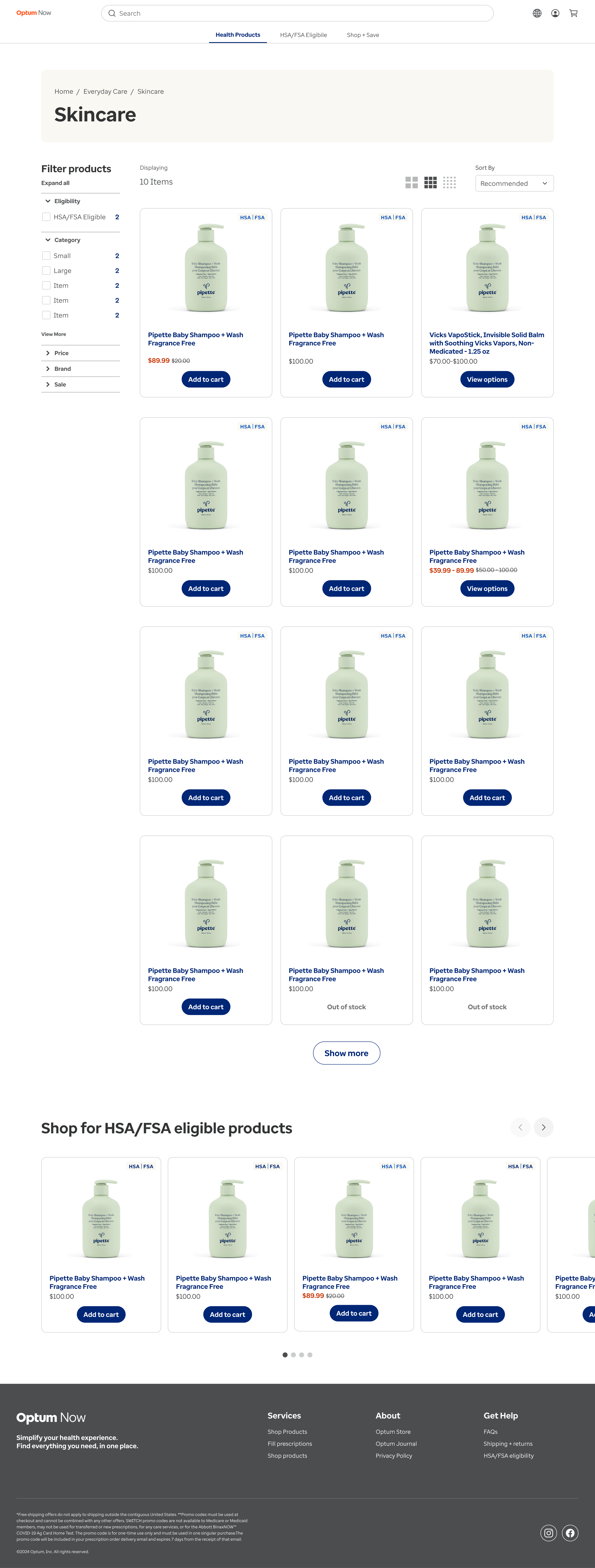
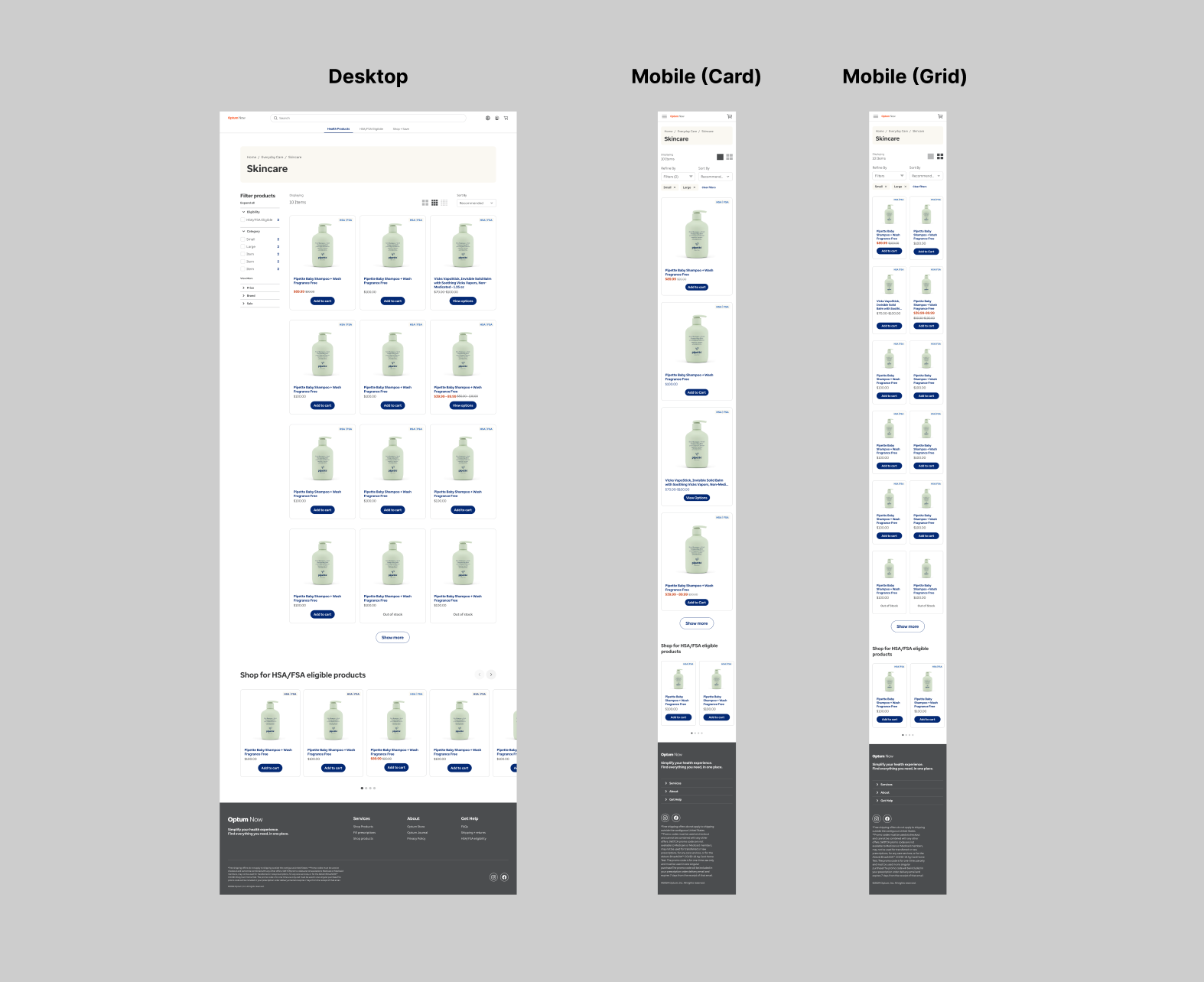
Optum Now uses a 3rd party (Orium) to integrate Optum Store to the platform. This integration allowed for users to be able to purchase out of pocket, but also because it could link to an Optum account they could also use their HSA/FSA to purchase eligible products.
We could also leverage session and user history data from viewed articles or known health conditions to “recommend” products relevant to the user.
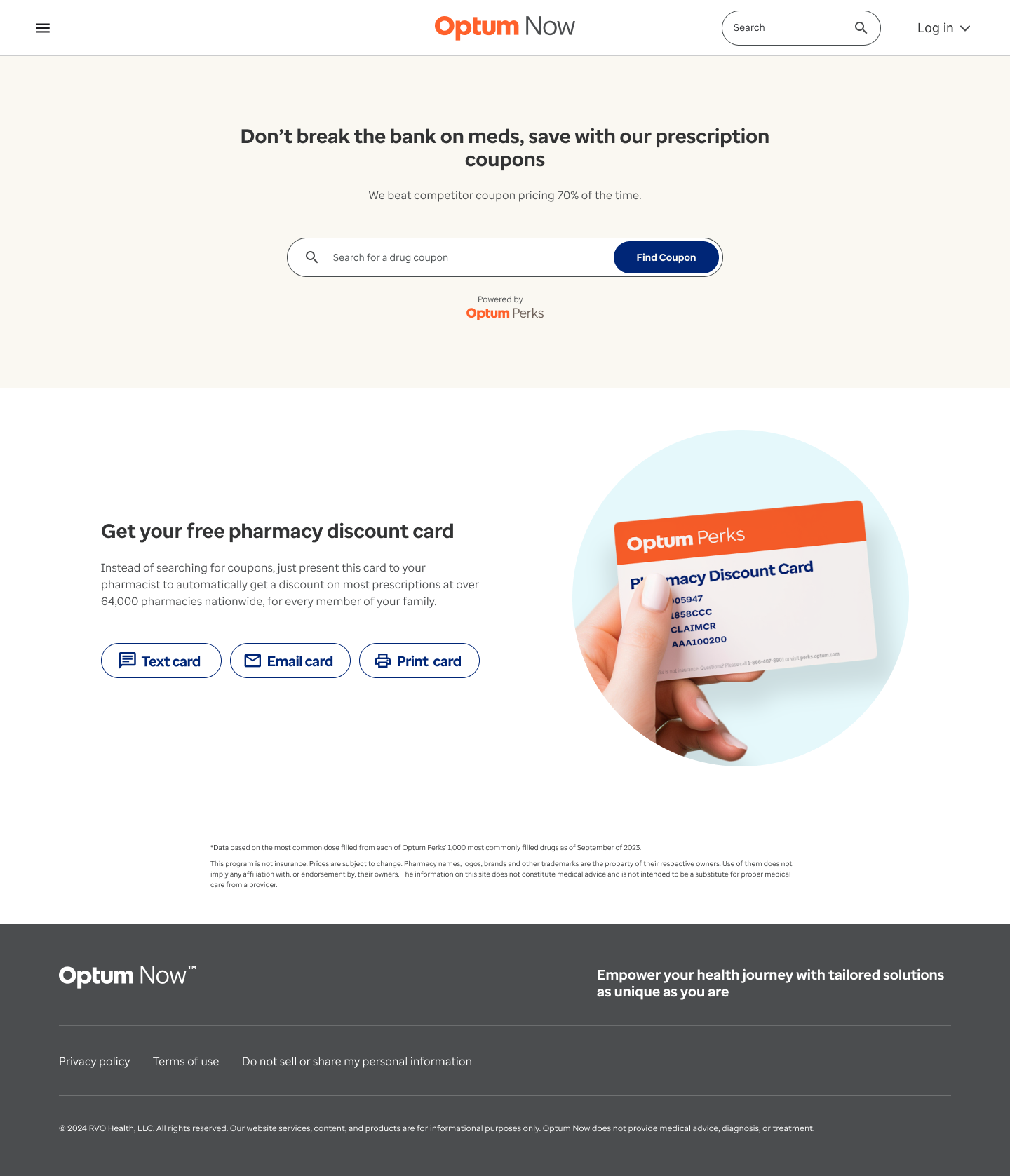
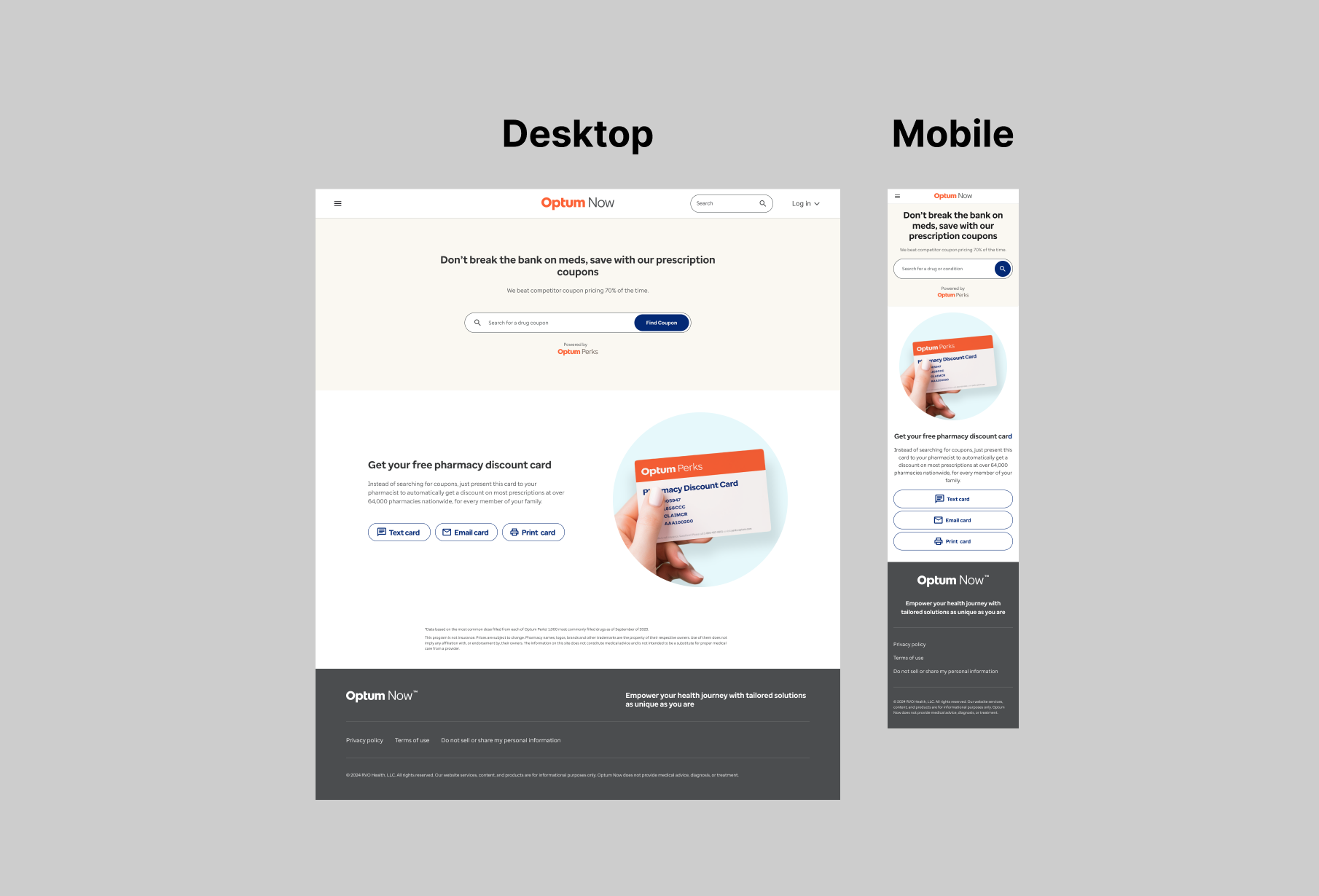
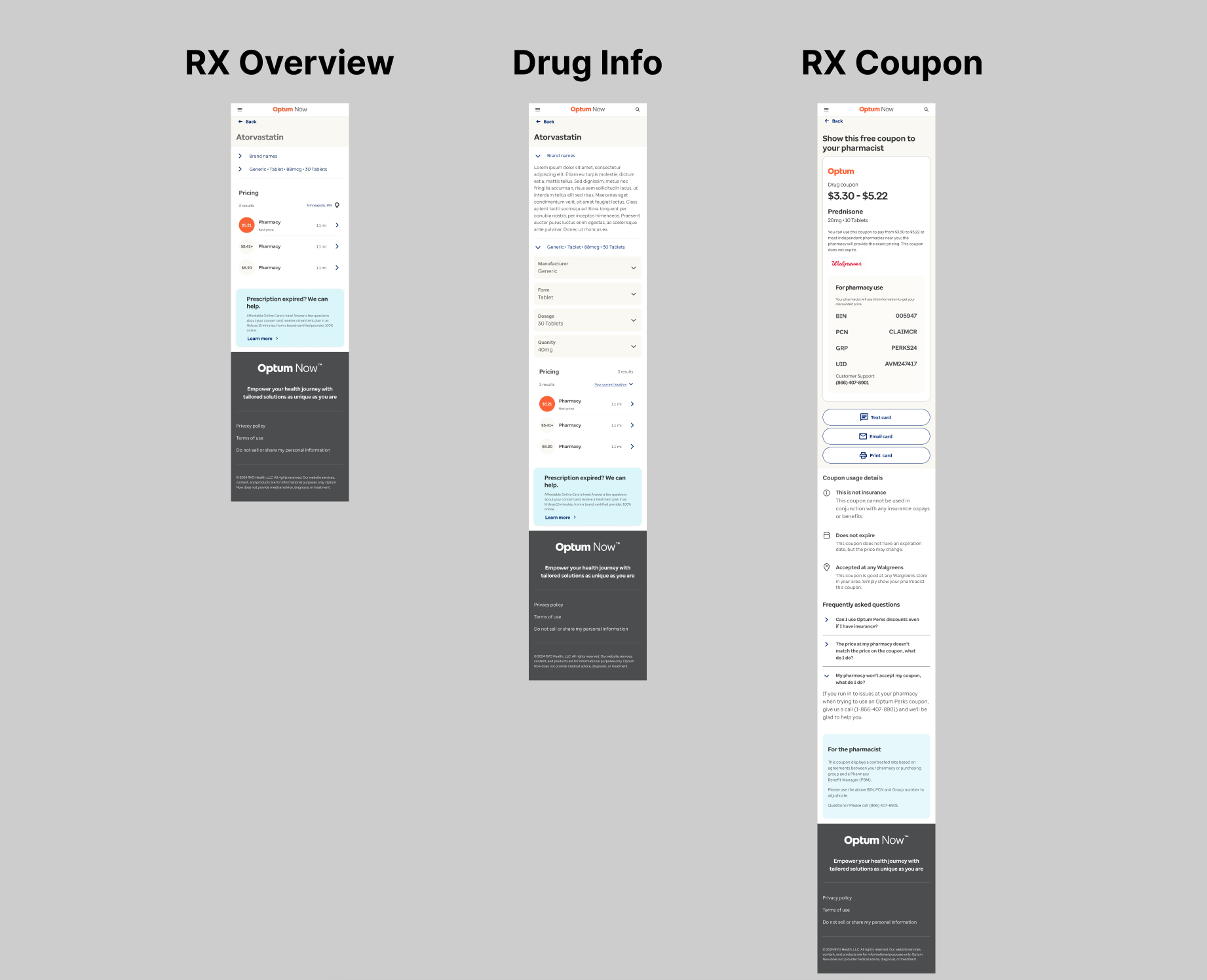
One of the biggest challenges was how we informed the user about RX products and our platform’s integration with Optum Perks. Optum Perks scans a selected drug and compares its prices across pharmacies and offers a coupon code for the best price. The user can then use this coupon to fulfill their drug order to their selected pharmacy.